High-efficiency, gas heating appliances (think gas furnaces, water heaters and boilers) are continuing to gain popularity in the U.S. as homeowners look to reduce their home energy costs and energy standards evolve. These high-efficiency, gas heating appliances utilize condensing technology, which incorporates a secondary heat exchanger to extract additional heat from the combustion gases. The combustion gases then “condense” into a liquid.
Although this game-changing innovation was first commercialized decades ago, condensing technology creates a byproduct that many contractors and homeowners are still often unaware of: acidic condensate. Unlike other HVAC condensate that rolls off the coils in an AC unit, acidic condensate is corrosive (with low pH of 2.9-4.0) because it includes various acids from burning natural gas. If discharged untreated, this residue can damage plumbing, concrete foundations, floor drains, septic systems and other wastewater infrastructure.
So, how do best-in-class industry pros proactively handle the acidic condensate corrosion issue? Here are some acidic condensate management best practices that they follow.
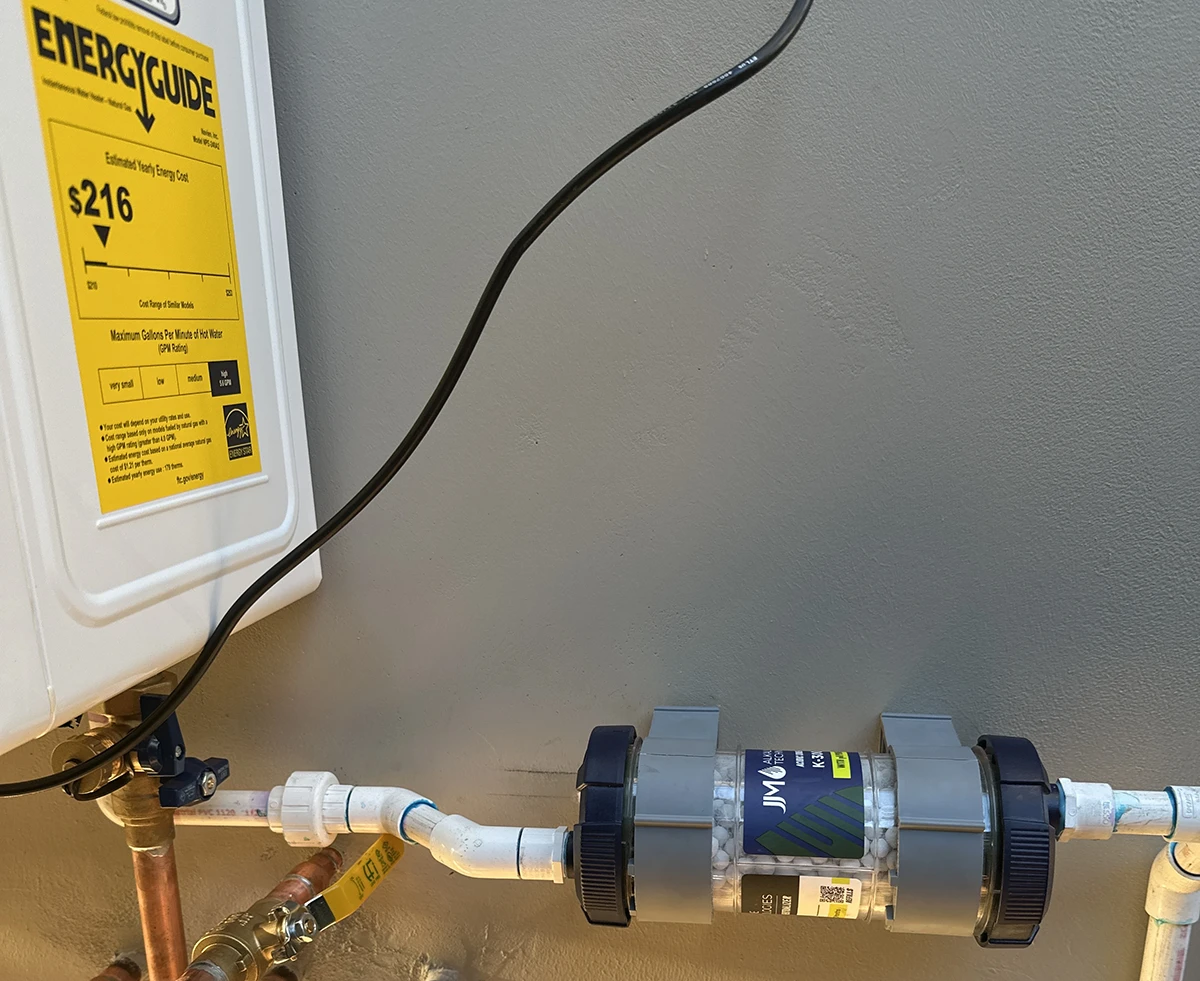
Acidic condensate management best practice: Install a condensate neutralizer on every high-efficiency installation
The acidic condensate corrosion issue can be solved by installing a purpose-built condensate neutralizer with every high-efficiency, gas heating appliance. A condensate neutralizer is a filtration-like device that raises the pH level of the acidic condensate (reducing its acidity) to a safe level before it’s discharged into the plumbing and wastewater systems. Installing a condensate neutralizer is not only a must to prevent costly property damages—it’s also a code requirement in most of the U.S.
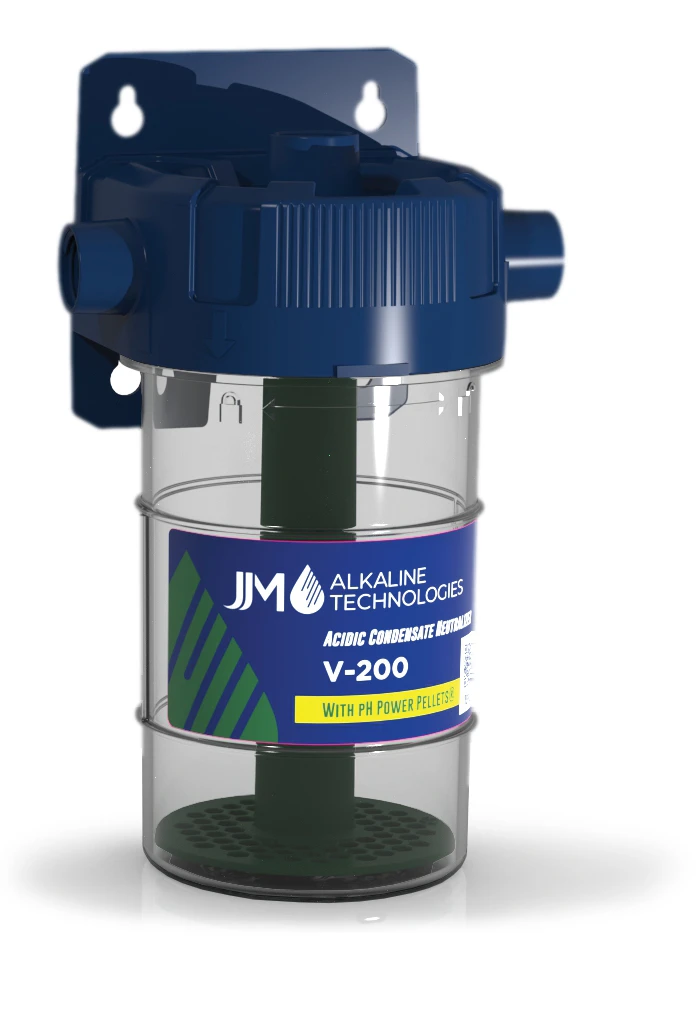
Best-in-class pros standardize the use of specific condensate neutralizer model(s) in each of their installation packages. For example, installers will utilize the JJM® model V-200 condensate neutralizer on every tankless gas water heater. The V-200 model is intended for condensing wall-hung boiler and tankless water heater installations (up to 200 MBH) where floor space is limited. With its vertical-mount design, the V-200 provides installation flexibility with two optional outlet ports, enabling versatile outlet piping configuration. The innovative end-cap design allows technicians to service the condensate neutralizer without disconnecting any fittings.
Acidic condensate management best practice: Install a condensate neutralizer during preventative maintenance and service calls
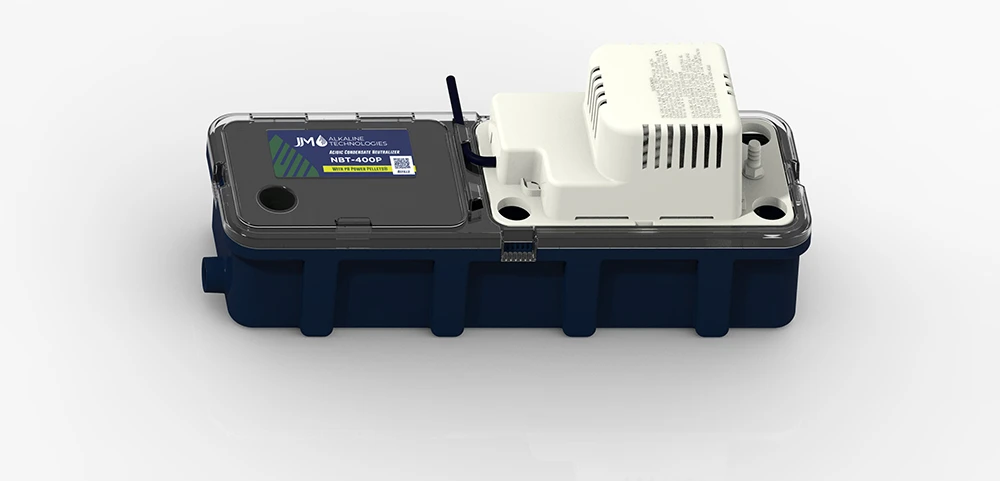
Service technicians are trained to educate homeowners and offer a condensate neutralizer during preventative maintenance and service calls of high-efficiency, gas appliances that were installed without a condensate neutralizer. For example, HVAC service teams will offer to install the JJM® model NBT-400P during a high-efficiency, gas furnace tune-up if a condensate neutralizer is not already present. Equipped with a built-in condensate pump, the NBT-400P model provides an all-in-one solution for efficient neutralization and disposal to a remote drain. This model is popular with HVAC pros because it is designed to handle both acidic condensate and non-acidic condensate from the coils. In addition, the NBT-400P features a removeable tray that ensures quick and easy replacement of the pH Power Pellets® media without disconnecting any fittings.
Acidic condensate management best practice: Don’t forget to service the condensate neutralizer regularly
Just like gas heating appliances, condensate neutralizers also need to be routinely serviced to maintain performance and effectiveness. If a condensate neutralizer is not properly maintained, it is comparable to not having a neutralizer at all. Generally, JJM® recommends that service technicians replace the condensate neutralizer media at least every 12 months. However, every installation varies based on the BTU capacity, operating hours and volume of acidic condensate produced. Best-in-class HVAC and plumbing service teams will build the condensate neutralizer service into the annual preventative maintenance programs of high-efficiency equipment.
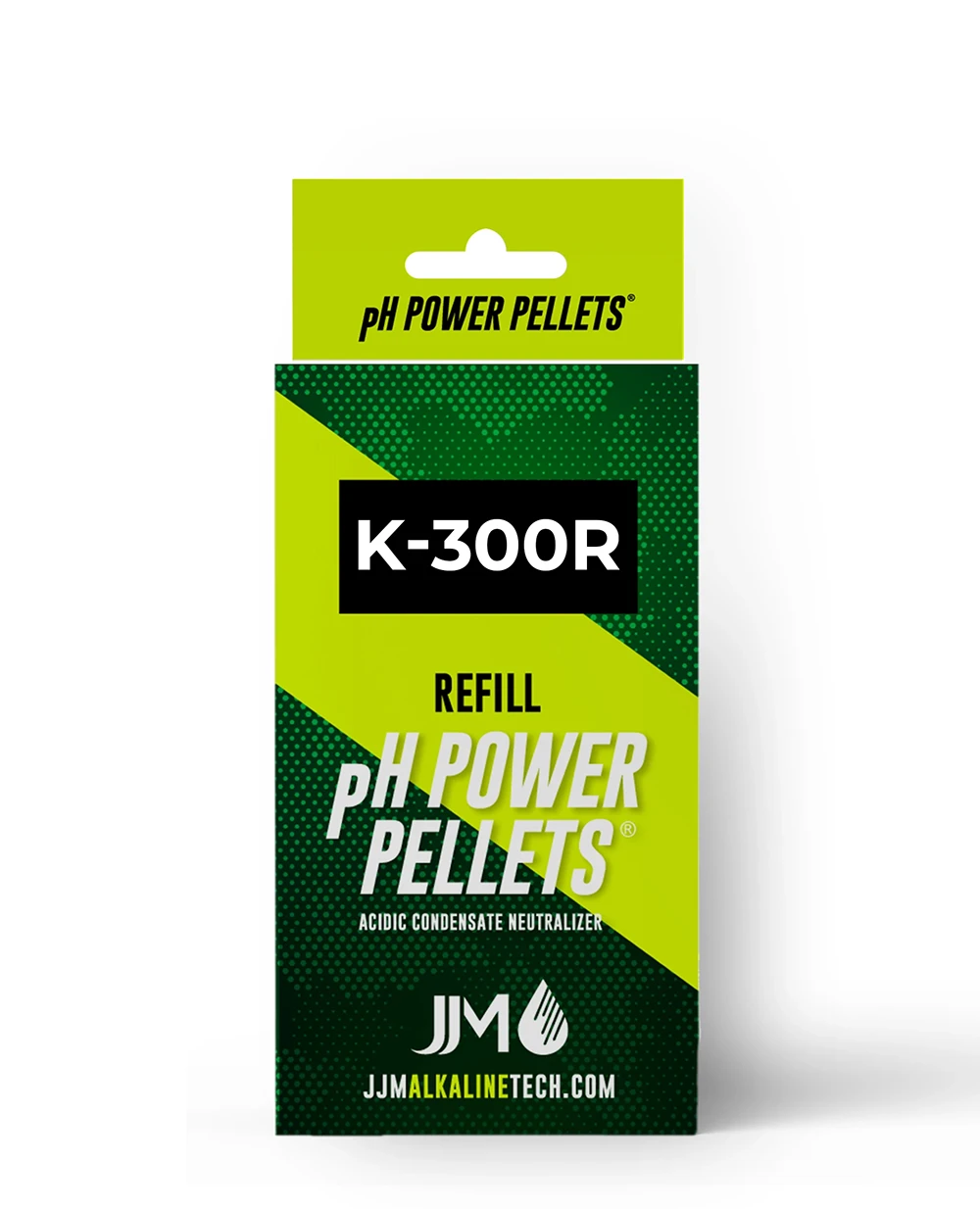
JJM® condensate neutralizers, like the NBT-400P and V-200, are designed to be quickly and efficiently serviced. Further, pH Power Pellets® refill kits are individually weighed and packaged for each JJM® condensate neutralizer model, which ensures quick and accurate service every time. No guesswork required in the field.
Acidic condensate management best practice: Partner with the pHirst & Best
The industry pioneer, JJM Alkaline Technologies® has been supplying HVAC and plumbing industry pros with reliable, purpose-built condensate neutralizers to effectively treat acidic condensate for 20 years. JJM® offers the best condensate neutralizer solutions on the market across residential and commercial installations. JJM® products are designed with industry pros in mind: versatile to install, quick and easy to service, and purpose-built for specific appliances, like condensing furnaces and tankless water heaters. JJM® condensate neutralizers are proudly Made in America.
JJM® also offers manufacturer training and field support. Request a training session from JJM® today. To buy from the pHirst and the best, click on our “Where to Buy” page to track down a JJM® authorized distributor. If your preferred distributor doesn’t stock JJM® yet, ask them to contact us (ask for the Blue Label).